United States · .900 silver
Twenty-Cent Piece 1875–1878
The twenty-cent piece of 1875–1878 is a 5 g coin of .900 silver containing 0.1447 troy ounce of silver.
Struck for circulation in 1875 and 1876 only; 1877 and 1878 are proof-only issues for collectors.
Melt value at the sample price
$7.23
- Face value
- 20¢
- Worth
- 36.2× face
- Silver spot
- $50.00 /oz
Calculated at a sample silver price, not a live market price.
Premium evaluator
Enter the price a dealer is asking to compare it with the melt value of $7.23 per coin.
Build a stack to total your gold and silver. Stored only in this browser.
How the melt value is calculated
Every step, with this coin’s own numbers. Change the price in Simulate spot at the top of the page and the calculation updates.
- 1. Silver in the coin5.00 g × 0.9 ÷ 31.1034768 = 0.1447 oz (4.500 g pure silver)
- 2. Silver price$50.00 per troy ounce
- 3. Melt value0.1447 oz × $50.00 = $7.23
About the Twenty-Cent Piece
The denomination was proposed by Senator John P. Jones of Nevada to ease a shortage of small change in the West. Coinage began in 1875 at Philadelphia, Carson City and San Francisco.
At 22 mm it was close to the quarter in size and had a nearly identical seated Liberty obverse, and the two were constantly confused. Over a million were struck in the first year, few in 1876, and only proofs in 1877 and 1878. Congress abolished the coin on May 2, 1878.
It weighs 5 g and is 22 mm across, with a plain edge.
How to identify it
- Obverse: Liberty seated with a shield and the date below, nearly identical to the quarter of the time.
- Reverse: an eagle holding arrows and an olive branch, with the denomination in words below.
- The edge is plain, not reeded, which is the quickest way to tell it from a quarter.
- Mint marks CC and S are below the eagle; Philadelphia coins have none.
Quick identification & value
- How much silver is in a twenty-cent piece?
- 0.1447 troy ounce when unworn: 5 g at .900 fine.
- How is it different from a Seated Liberty quarter?
- It is smaller (22 mm against 24.3 mm), weighs 5 g, has a plain edge rather than a reeded one, and is denominated twenty cents on the reverse.
- Is melt value the same as collector value?
- No. Melt value is only the value of the silver. Scarce dates, mint marks and well-preserved examples can sell for much more to collectors, while a dealer buying for silver content may offer somewhat less than melt.
- Does circulation wear affect the value?
- Slightly. The figures here use the official weight when struck. Heavily worn coins have lost a little metal, so their real silver content is modestly lower — and wear usually matters far more to collector value.
Related coins and tools
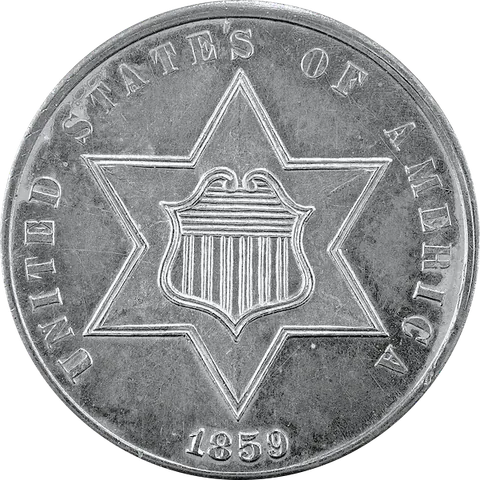
Three-Cent Silver (Trime), Types 2 and 3
1854–18730.0217 oz Ag
$1.0936.2× face value
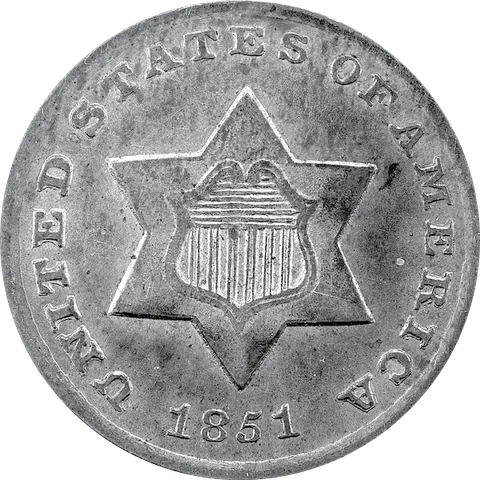
Three-Cent Silver (Trime), Type 1
1851–18530.0193 oz Ag
$0.9632.2× face value
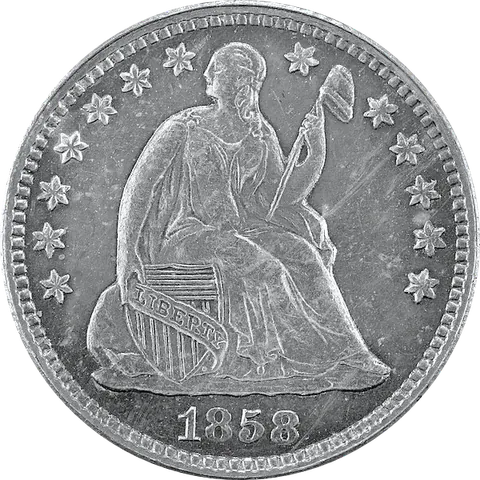
Seated Liberty Half Dime (1853–1873, Reduced Weight)
1853–18730.0360 oz Ag
$1.8036.0× face value
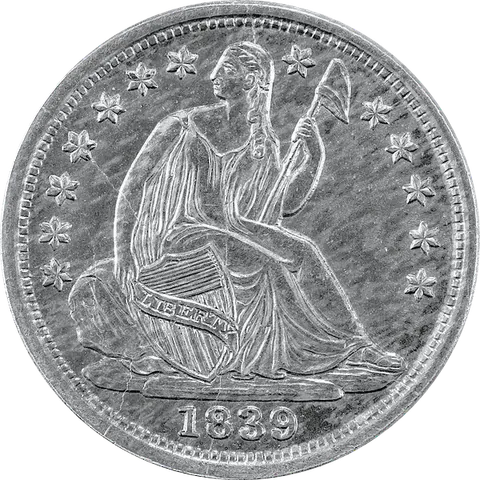
Seated Liberty Half Dime (1837–1853, No Arrows)
1837–18530.0387 oz Ag
$1.9338.7× face value
Sources and method
Specifications verified against
- Wikipedia: Twenty-cent piece (United States)1875–1878, 5 g, 90% silver, 0.1447 troy oz, 22 mm, plain edge; proofs only 1877–1878
- PCGS: 1875 20C (Proof) Twenty Cent – PCGS CoinFacts22.00 mm, 5.00 g, 90% silver, 10% copper; designer William Barber
- PCGS: The 1877 & 1878 Proof Twenty Cent Coins5 g, 22 mm; proof-only in 1877 and 1878
Method
Melt values are calculated from these specifications and the silver spot price; no value is stored or copied from another site. See the methodology and data sources.
Image
No licensed photograph is used for this coin. The medallion shown is an illustration generated from the coin’s specifications.