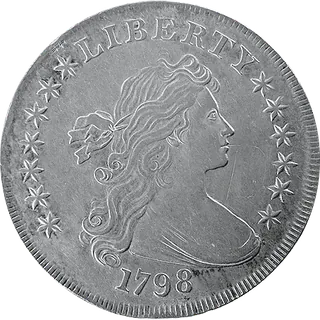
 Obverse
 Reverse
United States · .8924 silver
Draped Bust Dollar 1795–1803
The Draped Bust dollar was struck from 1795 to 1803 at the statutory standard of 416 grains (26.96 g) of .8924 silver, containing 371.25 grains of pure silver.
Dollars dated 1804 were struck from 1834 onward as presentation pieces and later restrikes; the last date used in regular production was 1803.
Melt value at the sample price
$38.67
- Face value
- $1
- Worth
- 38.7× face
- Silver spot
- $50.00 /oz
Calculated at a sample silver price, not a live market price.
Premium evaluator
Enter the price a dealer is asking to compare it with the melt value of $38.67 per coin.
Build a stack to total your gold and silver. Stored only in this browser.
How the melt value is calculated
Every step, with this coin’s own numbers. Change the price in Simulate spot at the top of the page and the calculation updates.
- 1. Silver in the coin26.9563 g × 0.8924 ÷ 31.1034768 = 0.7734 oz (24.056 g pure silver)Statutory weight 416 grains = 26.9563 g
- 2. Silver price$50.00 per troy ounce
- 3. Melt value0.7734 oz × $50.00 = $38.67
About the Draped Bust Dollar
The Draped Bust design replaced the Flowing Hair dollar in the autumn of 1795. The designer is not recorded; the portrait is usually credited to the artist Gilbert Stuart.
From late October 1795 the Mint used the alloy the Coinage Act of 1792 required: 1,485 parts silver in 1,664, about .8924 fine, giving 371.25 grains of pure silver in a 416-grain coin.
Two reverses exist: a small eagle in a wreath (1795–1798) and a heraldic eagle with a shield (1798–1803). The metal content is the same for both. Regular coinage of silver dollars stopped in 1804, and the coins struck that year were dated 1803.
How to identify it
- Obverse: a bust of Liberty with drapery at the bust line and the date below.
- Reverse: a small perched eagle (1795–1798) or a heraldic eagle (1798–1803).
- The edge is lettered rather than reeded.
- A dollar dated 1804 is not a regular-issue coin: genuine pieces are major rarities made decades later, and most seen are copies.
Quick identification & value
- How much silver is in a Draped Bust dollar?
- 371.25 grains of pure silver when unworn, which is 0.7734 troy ounce, in a coin weighing 416 grains (26.96 g).
- Is it the same silver content as a Morgan or Peace dollar?
- Yes in pure silver: both hold 371.25 grains. The early dollar is heavier overall (416 against 412.5 grains) because its alloy is .8924 fine rather than .900.
- Is melt value the same as collector value?
- No. Melt value is only the value of the silver. Scarce dates, mint marks and well-preserved examples can sell for much more to collectors, while a dealer buying for silver content may offer somewhat less than melt.
- Does circulation wear affect the value?
- Slightly. The figures here use the official weight when struck. Heavily worn coins have lost a little metal, so their real silver content is modestly lower — and wear usually matters far more to collector value.
Related coins and tools
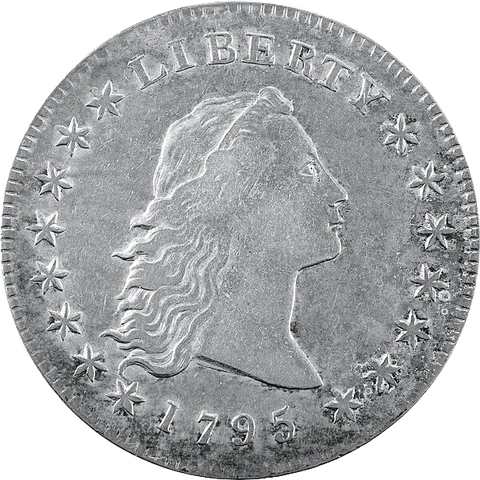
Flowing Hair Dollar
1794–17950.7800 oz Ag
$39.0039.0× face value
Classic Silver Commemorative Half Dollar
1892–19540.3617 oz Ag
$18.0836.2× face value
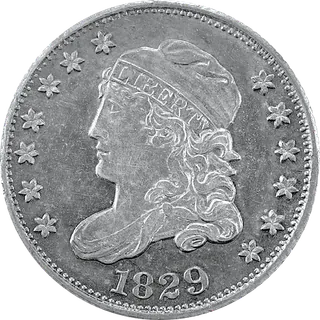
Half Dime (Flowing Hair, Draped Bust and Capped Bust)
1794–18370.0387 oz Ag
$1.9338.7× face value
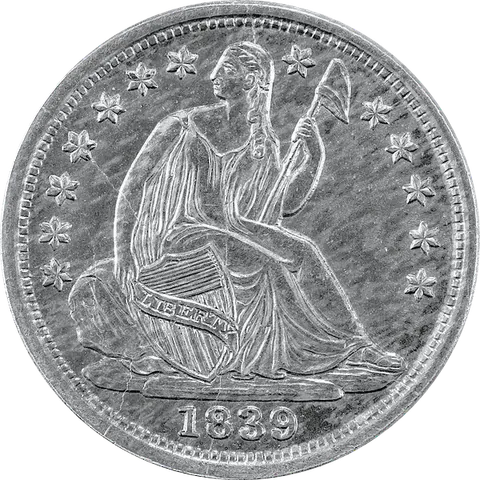
Seated Liberty Half Dime (1837–1853, No Arrows)
1837–18530.0387 oz Ag
$1.9338.7× face value
Sources and method
Specifications verified against
- Wikipedia: Draped Bust dollarMinted 1795–1803, 26.96 g, 89.2% silver, 1804-dated pieces are later strikes
- Wikipedia: Coinage Act of 1792Dollar: 371 4/16 grains pure or 416 grains standard silver
- Numista: 1 Dollar "Draped Bust Dollar" (Heraldic eagle) – United StatesWeight 26.96 g, silver .8924, 39 mm, silver content 371¼ grains
- PCGS: 1795 $1 Draped Bust – PCGS CoinFactsSeries dates 1795–1803, 40 mm, 27.00 g
Method
Melt values are calculated from these specifications and the silver spot price; no value is stored or copied from another site. See the methodology and data sources.
Image
- Obverse and reverse: National Numismatic Collection, National Museum of American History (Smithsonian). Photo: Jaclyn Nash. Public domain, via Wikimedia Commons. Source · Public domain
- Background removed and resized, and its colour evened to a neutral silver tone; otherwise unaltered.