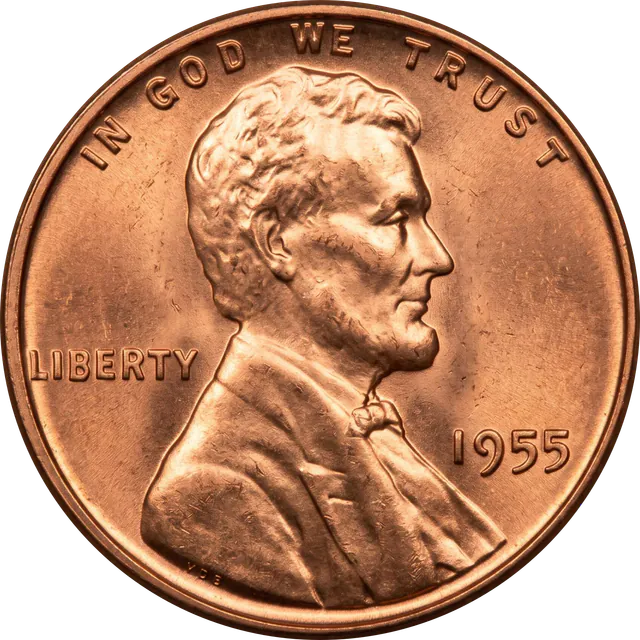
United States · 95% copper · no silver
Lincoln Wheat Cent 1909–1958
Lincoln cents with the wheat reverse, dated 1909 to 1958, are 95% copper. The one exception is 1943, when they were made of zinc-coated steel.
Every year except 1943, when cents were struck in zinc-coated steel instead of copper.
Copper melt value at sample prices
$0.0326
- Face value
- $0.01
- Worth
- 3.3× face
- Copper price
- $5.00 /lb
Calculated at sample metal prices, not live market prices. This coin is valued for its copper, so the silver price and Simulate spot at the top of the page do not change it.
Premium evaluator
Enter the price a dealer is asking to compare it with the melt value of $0.0326 per coin.
How the melt value is calculated
Every step, with this coin’s own numbers.
- 1. Copper in the coin3.11 g × 0.95 = 2.9545 g2. Copper value2.9545 g ÷ 453.59237 g per lb × $5.00 = $0.0326
The other 5% is tin and zinc (zinc alone from 1944 to 1946). It is not counted, because the split between the two was never fixed.
It takes about 154 of these coins to hold one pound of copper.
About the Lincoln Wheat Cent
The Lincoln cent was introduced in 1909, the centennial of Abraham Lincoln’s birth, with a portrait by Victor David Brenner. Until 1958 the reverse showed two ears of wheat framing the words ONE CENT, which is why these are called wheat cents or wheat pennies.
The alloy is 95% copper, with the remaining 5% made up of tin and zinc. In 1943 copper was needed for the war effort and cents were struck in zinc-coated steel. Copper returned in 1944; from 1944 to 1946 the remaining 5% was zinc alone.
The melt value on this page counts the copper only.
How to identify it
- The reverse shows two ears of wheat on either side of ONE CENT and UNITED STATES OF AMERICA.
- Dated 1909 to 1958.
- A cent dated 1943 is normally grey zinc-coated steel, not copper, and is not covered by the value on this page.
- A mint mark, if there is one (D or S), sits below the date.
Quick identification & value
- Are 1943 wheat cents copper?
- Normally no. Cents dated 1943 were struck in zinc-coated steel and weigh 2.70 grams. A few were struck in bronze by mistake; they are well-known rarities and are valuable.
- Is a wheat cent worth more than its copper?
- Often, to a collector. The value here is only the copper. Scarce dates and mint marks, such as the 1909-S with the designer’s initials VDB, and well-preserved examples sell for more.
- Can I melt cents for the copper?
- No. Federal regulations (31 C.F.R. Part 82) prohibit melting one-cent and five-cent coins, with limited exceptions. The melt value shown here measures the metal in the coin; it is not an amount you can legally obtain by melting it.
Related coins
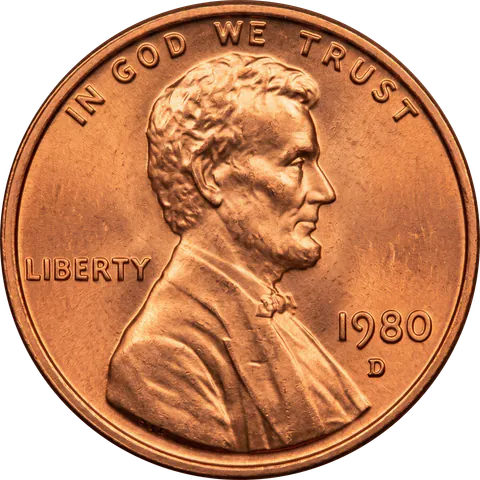
Lincoln Memorial Cent
1959–19822.95 g Cu
$0.03263.3× face value
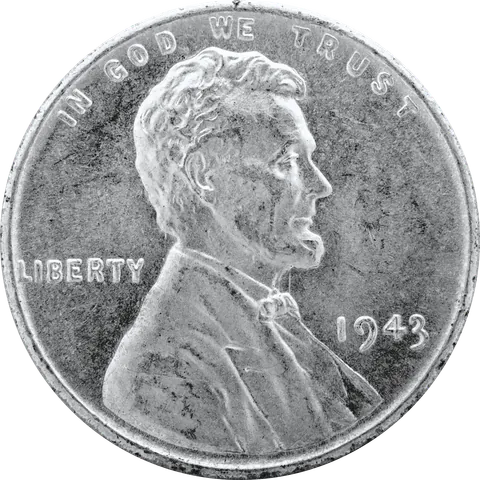
1943 Steel Cent
19432.67 g steel
$0.00090.09× face value
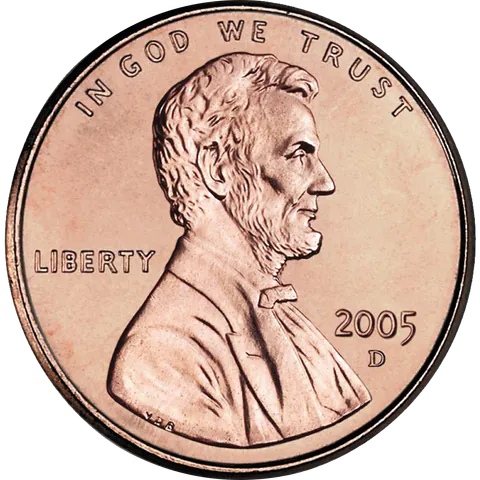
Lincoln Zinc Cent
1982–20252.50 g Zn
$0.00870.87× face value
Sources and method
Specifications verified against
- PCGS CoinFacts: 1958 1C Lincoln Cent (Wheat Reverse)Weight 3.11 g; metal 95% copper, 5% tin and zinc
- PCGS CoinFacts: 1943 1C Lincoln Cent (Wheat Reverse)1943 cents are zinc-coated steel and weigh 2.70 g
- United States Mint: PennyComposition history: tin removed from the alloy in 1962; changed to copper-plated zinc (2.5% copper) in 1982
- United States Mint: Penny FAQsMelting cents and nickels is prohibited under 31 C.F.R. § 82.2(f), with limited exceptions
- Wikipedia: Lincoln centComposition by year (95% copper 1909–1942 and 1944–1982; zinc-coated steel in 1943), 3.11 g weight, 19.05 mm diameter, designers, mint mark position
Melt values are calculated from these specifications and the metal price; no value is stored or copied from another site. See the methodology and data sources.
Image
- Obverse: Generated illustration. Not a photograph of a real coin. · Owner-supplied illustration
- This is an illustration, not a photograph of a real coin. Verified against: Photograph of a 1955 Lincoln cent (Wikimedia Commons) and the Lincoln cent design description (Wikipedia, citing the U.S. Mint). Checked on the obverse: Lincoln bust facing right; IN GOD WE TRUST around the top; LIBERTY to the left; date 1955 to the right; designer's initials on the shoulder cutoff, present from 1918; no mint mark, correct for Philadelphia. Copper colour as struck. Obverse only; no image of the reverse is shown.