 Obverse
 Reverse
United States · Zinc-coated steel · no silver
1943 Steel Cent
Lincoln cents dated 1943 were struck in zinc-coated steel so that copper could go to the war effort. They contain no copper and almost no metal value.
Steel melt value at a reference steel price
$0.0009
- Face value
- $0.01
- Worth
- 0.09× face
- Steel reference price
- $0.1447 /lb
Our price feed has no live steel price, so this uses a fixed reference price, not a live one: No. 1 heavy melting steel scrap, U.S. average for 2025: $319 per metric ton (U.S. Geological Survey, Mineral Commodity Summaries 2026 (Iron and Steel Scrap)). This coin is valued for its steel, so the silver price and Simulate spot at the top of the page do not change it.
Premium evaluator
Enter the price a dealer is asking to compare it with the melt value of $0.0009 per coin.
How the melt value is calculated
Every step, with this coin’s own numbers.
- 1. Steel in the coin2.70 g × 0.99 = 2.6730 g2. Steel value2.6730 g ÷ 453.59237 g per lb × $0.1447 (reference price) = $0.0009
The thin zinc coating, about 1% of the coin, is not counted. Steel has no live price in our feed, so it is valued at a fixed reference price for scrap steel.
It takes about 170 of these coins to hold one pound of steel.
About the 1943 Steel Cent
With copper needed for the war, Congress authorised a change in the cent, and for 1943 the Mint struck it in steel with a thin coating of zinc. The coins were made at Philadelphia, Denver and San Francisco.
The steel cent was unpopular. New coins were often mistaken for dimes, they are magnetic, and the zinc wore through at the edges so that the steel underneath rusted. Copper-based cents returned in 1944.
How to identify it
- Dated 1943, with the usual wheat reverse.
- Grey rather than copper-coloured, and it sticks to a magnet.
- Weighs 2.70 grams, against 3.11 grams for a copper cent.
Quick identification & value
- Is a 1943 steel cent worth anything?
- Its metal is worth a small fraction of a cent. Any value comes from collectors, and depends on condition.
- What about a copper-coloured 1943 cent?
- A few 1943 cents were struck in bronze by mistake and are valuable rarities. Steel cents plated with copper to imitate them are common; a genuine bronze cent does not stick to a magnet.
- Can I melt these coins for the metal?
- No. Federal regulations (31 C.F.R. Part 82) prohibit melting one-cent and five-cent coins, with limited exceptions. The melt value shown here measures the metal in the coin; it is not an amount you can legally obtain by melting it.
Related coins
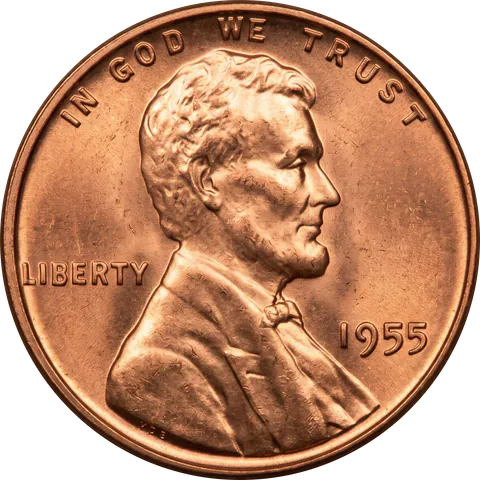
Lincoln Wheat Cent
1909–19582.95 g Cu
$0.03263.3× face value
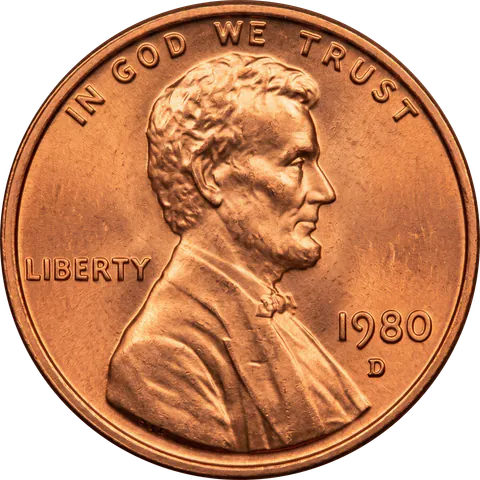
Lincoln Memorial Cent
1959–19822.95 g Cu
$0.03263.3× face value
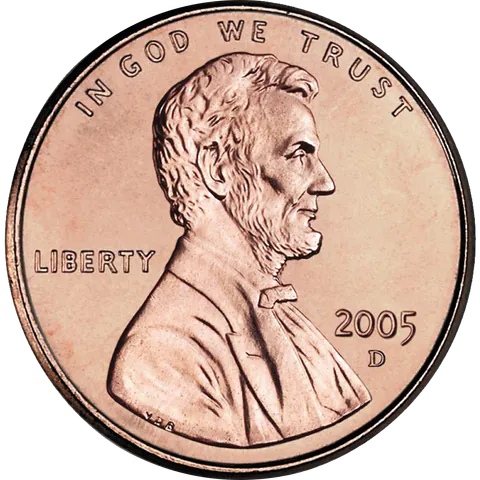
Lincoln Zinc Cent
1982–20252.50 g Zn
$0.00870.87× face value
Sources and method
Specifications verified against
- PCGS CoinFacts: 1943 1C Lincoln Cent (Wheat Reverse)Weight 2.70 g; zinc-coated steel
- Wikipedia: 1943 steel cent99% steel with a thin layer of zinc; struck at three mints; magnetic; rusting; 19.05 mm
- United States Mint: Penny FAQsMelting cents and nickels is prohibited under 31 C.F.R. § 82.2(f), with limited exceptions
Melt values are calculated from these specifications and the metal price; no value is stored or copied from another site. See the methodology and data sources.
Image
- Obverse: National Numismatic Collection, National Museum of American History (Smithsonian). Photo: Jaclyn Nash. Public domain, via Wikimedia Commons. Source · Public domain
- Reverse: National Numismatic Collection, National Museum of American History (Smithsonian). Photo: Jaclyn Nash. Public domain, via Wikimedia Commons. Source · Public domain
- Background removed and resized, and its colour evened to a neutral silver tone; otherwise unaltered.