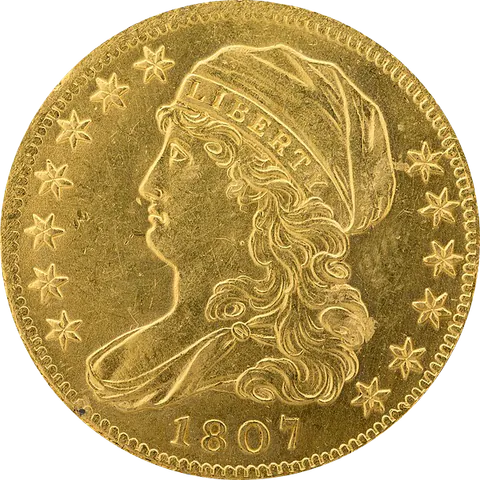
 Obverse
 Reverse
United States · 22k (.9167) gold
Capped Bust Half Eagle 1795–1834
Half eagles ($5) struck from 1795 to 1834 follow the original 1792 standard: 135 grains (8.75 g) of 22-karat (.9167) gold, about 0.2578 troy oz of pure gold.
Half eagles dated 1834 exist in both this standard (motto E PLURIBUS UNUM on the reverse) and the lighter Classic Head standard (no motto).
Melt value at the sample price
$1,031.29
- Face value
- $5
- Worth
- 206× face
- Gold spot
- $4,000.00 /oz
Calculated at a sample gold price, not a live market price.
Premium evaluator
Enter the price a dealer is asking to compare it with the melt value of $1,031.29 per coin.
Build a stack to total your gold and silver. Stored only in this browser.
How the melt value is calculated
Every step, with this coin’s own numbers. Change the price in Simulate spot at the top of the page and the calculation updates.
- 1. Gold in the coin8.7479 g × 0.9167 ÷ 31.1034768 = 0.2578 oz (8.019 g pure gold)Statutory weight 135 grains = 8.7479 g
- 2. Gold price$4,000.00 per troy ounce
- 3. Melt value0.2578 oz × $4,000.00 = $1,031.29
About the Capped Bust Half Eagle
The half eagle was the first gold coin struck by the United States, in 1795. Under the Coinage Act of 1792 it weighed 135 grains of eleven-twelfths (22-karat) gold, half of the 270-grain eagle.
Designs on this standard are Robert Scot's Capped Bust facing right, also called Turban Head (1795–1807), John Reich's Capped Bust facing left (1807–1812) and the Capped Head (1813–1834, reduced to 23.8 mm in 1829).
By 1834 the gold in these coins had been worth more than $5 for several years and most were melted. The Act of June 28, 1834 reduced the weight and fineness; later half eagles contain less gold.
How to identify it
- 1795–1807: Liberty wearing a cap, facing right; small eagle (1795–1798) or large heraldic eagle reverse.
- 1807–1834: Liberty faces left wearing a round cap; the value '5 D.' appears on the reverse.
- All coins on this standard have the motto E PLURIBUS UNUM on the reverse. An 1834 half eagle without it is the lighter Classic Head type.
- About 25 mm across (23.8 mm from 1829) and about 8.75 g.
Quick identification & value
- How much gold is in a half eagle dated before 1834?
- About 0.2578 troy oz of pure gold: 135 grains (8.75 g) at .9167 fine.
- How do I tell which standard an 1834 half eagle is?
- The old-standard coin has E PLURIBUS UNUM on the reverse. The Classic Head coin introduced that year omits the motto and is lighter (8.36 g).
- Is melt value the same as collector value?
- No. Melt value is only the value of the gold. Scarce dates, mint marks and well-preserved examples can sell for much more to collectors, while a dealer buying for gold content may offer somewhat less than melt.
- Does circulation wear affect the value?
- Slightly. The figures here use the official weight when struck. Heavily worn coins have lost a little metal, so their real gold content is modestly lower — and wear usually matters far more to collector value.
Related coins and tools
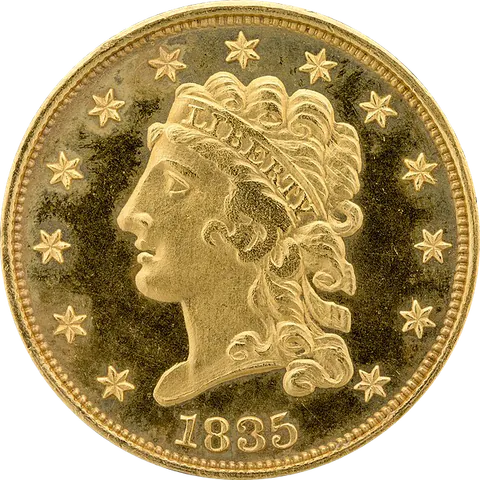
Classic Head Quarter Eagle (.8992 Gold)
1834–18360.1208 oz Au
$483.32193× face value
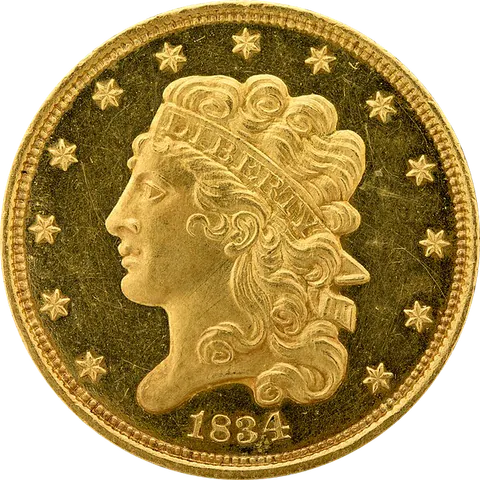
Classic Head Half Eagle (.8992 Gold)
1834–18360.2417 oz Au
$966.75193× face value
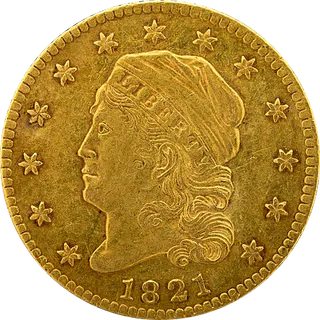
Capped Bust Quarter Eagle
1796–18340.1289 oz Au
$515.64206× face value
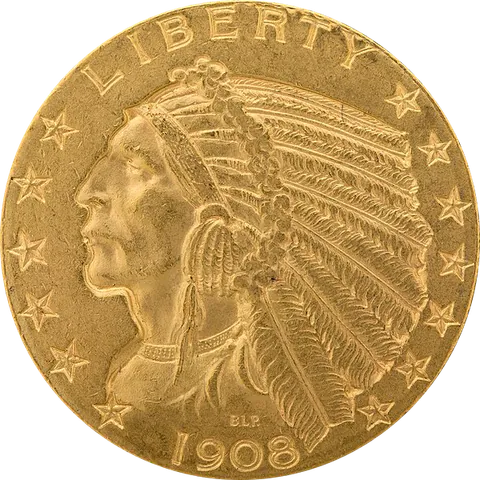
Liberty Head and Indian Head Half Eagle
1837–19290.2419 oz Au
$967.50194× face value
Sources and method
Specifications verified against
- Wikipedia: Half eagle1795–1834: .9167 gold, 8.75 g, 25 mm; designs and dates
- Wikipedia: Eagle (United States coin)1792 standard: half eagle 135 grains; eagle 0.5156 troy oz pure gold (half of that is 0.2578)
- PCGS: 1822 $5 (Regular Strike) Capped Bust $5 - PCGS CoinFactsWeight 8.75 grams; 91.7% gold
Method
Melt values are calculated from these specifications and the gold spot price; no value is stored or copied from another site. See the methodology and data sources.
Image
- Obverse and reverse: National Numismatic Collection, National Museum of American History (Smithsonian). Photo: Jaclyn Nash. Public domain, via Wikimedia Commons. Source · Public domain
- Background removed and resized; otherwise unaltered.