 Obverse
 Reverse
United States · 90% silver
Trade Dollar 1873–1885
A 90% silver dollar struck for overseas trade, slightly heavier than a standard U.S. silver dollar.
Struck for commerce from 1873 to 1878; later dates were made only as proofs.
Melt value at the sample price
$39.38
- Face value
- $1.00
- Worth
- 39.4× face
- Silver spot
- $50.00 /oz
Calculated at a sample silver price, not a live market price.
Premium evaluator
Enter the price a dealer is asking to compare it with the melt value of $39.38 per coin.
Build a stack to total your gold and silver. Stored only in this browser.
How the melt value is calculated
Every step, with this coin’s own numbers. Change the price in Simulate spot at the top of the page and the calculation updates.
- 1. Silver in the coin27.2155 g × 0.9 ÷ 31.1034768 = 0.7875 oz (24.494 g pure silver)Statutory weight 420 grains = 27.2155 g
- 2. Silver price$50.00 per troy ounce
- 3. Melt value0.7875 oz × $50.00 = $39.38
About the Trade Dollar
The Trade dollar was authorised by the Coinage Act of 1873 for commerce in Asia. At 420 grains (27.22 grams) it is heavier than the 412.5 grain standard silver dollar, and its reverse states the weight and fineness: "420 GRAINS, 900 FINE".
Coins for commerce were struck until 1878; after that only small numbers of proofs were made. Genuine Trade dollars are worth well above face and bullion value to collectors, and because of that demand there are many counterfeits — so authentication matters far more than melt value.
How to identify it
- Dated 1873–1885, with TRADE DOLLAR and "420 GRAINS, 900 FINE" on the reverse.
- Should weigh about 27.2 grams. Counterfeits are common and some are well made, so a correct weight does not prove a coin is genuine.
Quick identification & value
- How much silver is in a Trade dollar?
- About 0.7875 troy ounces: 420 grains (27.22 grams) × 90%, with 480 grains to the troy ounce — slightly more than a Morgan or Peace dollar.
- Should a Trade dollar be valued at melt?
- Rarely. Genuine examples are worth considerably more to collectors than their silver. Because counterfeits are common, have a suspected Trade dollar authenticated before assuming either value.
- Is melt value the same as collector value?
- No. Melt value is only the value of the silver. Scarce dates, mint marks and well-preserved examples can sell for much more to collectors, while a dealer buying for silver content may offer somewhat less than melt.
- Does circulation wear affect the value?
- Slightly. The figures here use the official weight when struck. Heavily worn coins have lost a little metal, so their real silver content is modestly lower — and wear usually matters far more to collector value.
Related coins and tools
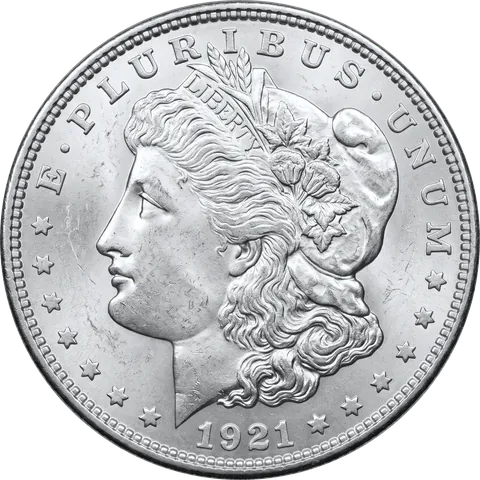
Morgan Dollar
1878–19210.7734 oz Ag
$38.6738.7× face value
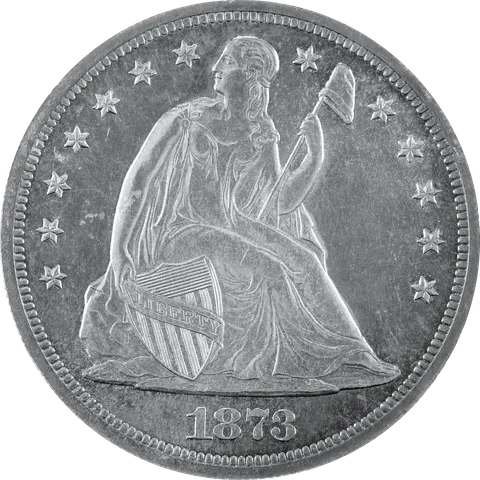
Seated Liberty Dollar
1840–18730.7734 oz Ag
$38.6738.7× face value
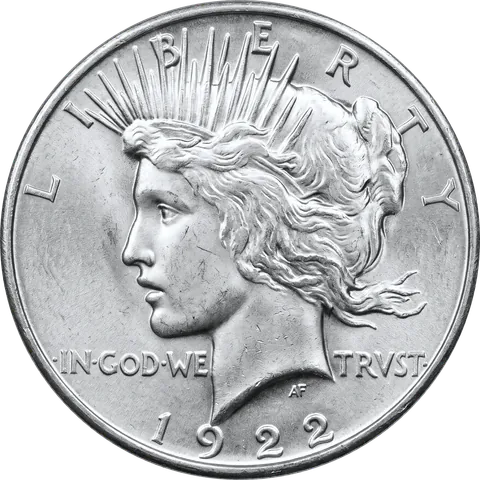
Peace Dollar
1921–19350.7734 oz Ag
$38.6738.7× face value
Sources and method
Specifications verified against
- PCGS CoinFacts: Trade Dollar (1873–1885)27.22 g of .900 fine silver, 420 grains, years struck
- Wikipedia: Trade dollar (United States coin)Years, 420 grain weight, composition, end of business strikes in 1878
Method
Melt values are calculated from these specifications and the silver spot price; no value is stored or copied from another site. See the methodology and data sources.
Image
- Obverse and reverse: National Numismatic Collection, National Museum of American History (Smithsonian). Photo: Jaclyn Nash. Public domain, via Wikimedia Commons. Source · Public domain
- Background removed and resized, and its colour evened to a neutral silver tone; otherwise unaltered.