 Obverse
 Reverse
United States · 75% copper, 25% nickel · no silver
Jefferson Nickel 1938–present
Jefferson nickels are 75% copper and 25% nickel and weigh 5 grams, apart from the silver wartime nickels of 1942 to 1945.
Except the wartime nickels of late 1942 to 1945, which contain 35% silver and no nickel. Nickels dated 1942 exist in both metals.
Melt value at sample prices
$0.0634
- Face value
- $0.05
- Worth
- 1.3× face
- Copper price
- $5.00 /lb
Calculated at sample metal prices, not live market prices. This coin is valued for its copper and nickel, so the silver price and Simulate spot at the top of the page do not change it.
Premium evaluator
Enter the price a dealer is asking to compare it with the melt value of $0.0634 per coin.
How the melt value is calculated
Every step, with this coin’s own numbers.
- 1. Copper in the coin5.00 g × 0.75 = 3.7500 g2. Copper value3.7500 g ÷ 453.59237 g per lb × $5.00 = $0.0413
- 3. Nickel in the coin5.00 g × 0.25 = 1.2500 g4. Nickel value1.2500 g ÷ 453.59237 g per lb × $8.00 = $0.0220
- 5. Melt value$0.0413 + $0.0220 = $0.0634
It takes about 121 of these coins to hold one pound of copper.
About the Jefferson Nickel
Felix Schlag’s Jefferson nickel replaced the Buffalo nickel in 1938, with Jefferson on the front and his home, Monticello, on the back.
From October 1942 until the end of 1945 nickel was needed for the war, and the coin was struck in an alloy of copper, silver and manganese. Those wartime nickels carry a large mint mark above Monticello and have their own page. The regular alloy returned in 1946 and has been used since.
How to identify it
- Jefferson on the obverse; Monticello on the reverse for most years.
- Dated 1938 to 1941, or 1946 and later: copper-nickel.
- Dated 1942 to 1945 with a large P, D or S above Monticello: a silver wartime nickel, not this type.
Quick identification & value
- Is a nickel worth more than five cents in metal?
- That depends on copper and nickel prices on the day; the figure at the top of this page is the current answer.
- Which nickels are silver?
- Only wartime nickels dated 1942 to 1945 with a large mint mark above Monticello. Every other Jefferson nickel is copper-nickel.
- Can I melt these coins for the metal?
- No. Federal regulations (31 C.F.R. Part 82) prohibit melting one-cent and five-cent coins, with limited exceptions. The melt value shown here measures the metal in the coin; it is not an amount you can legally obtain by melting it.
Related coins
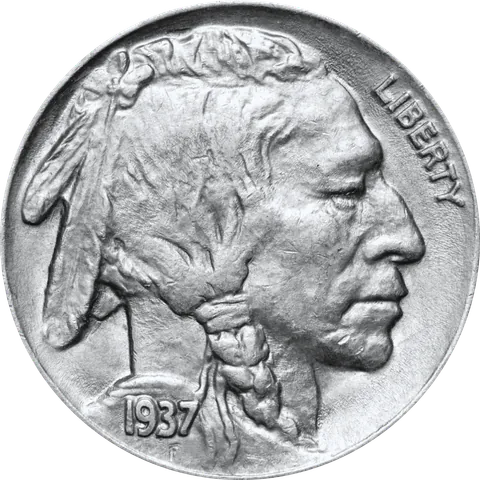
Buffalo Nickel
1913–19385.00 g Cu-Ni
$0.06341.3× face value
Sources and method
Specifications verified against
- United States Mint: Coin SpecificationsCurrent weight, composition and diameter of the cent, nickel, dime, quarter, half dollar and dollar
- Wikipedia: Jefferson nickel75% copper and 25% nickel; wartime alloy from October 1942 to 1945 with a large mint mark above Monticello; 5.000 g; 21.21 mm; designer
- United States Mint: Penny FAQsMelting cents and nickels is prohibited under 31 C.F.R. § 82.2(f), with limited exceptions
Melt values are calculated from these specifications and the metal price; no value is stored or copied from another site. See the methodology and data sources.
Image
- Obverse: Photo: Slashme, CC BY-SA 3.0, via Wikimedia Commons. Source · CC BY-SA 3.0
- Reverse: Photo: Slashme, CC BY-SA 3.0, via Wikimedia Commons. Source · CC BY-SA 3.0
- Background removed and resized, and its colour evened to a neutral silver tone; otherwise unaltered.